
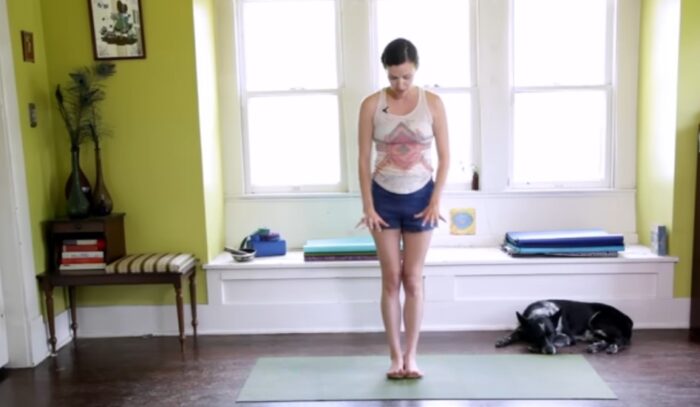
In the vast and varied forest of yoga asanas, few poses are as universally recognized, deceptively simple, and profoundly symbolic as Tree Pose, or Vrksasana. It is often one of the first balancing postures introduced to a beginner, a seemingly straightforward act of standing on one leg.
Yet, to dismiss it as elementary is to overlook the rich tapestry of physical, mental, and philosophical lessons it offers. Tree Pose is a microcosm of the entire yoga practice—a dynamic dance between effort and ease, stability and mobility, grounding and expansion. It is a pose that teaches us not just to balance, but to how to be balanced.
This article will delve deep into the world of Vrksasana, exploring its anatomical intricacies, its profound mental challenges, and its timeless symbolic resonance. We will move beyond the basic «foot on the calf» instruction to uncover the pose as a masterclass in postural intelligence, a meditation in motion, and a powerful metaphor for living with rooted stability and graceful growth.
The Anatomy of Equilibrium: Deconstructing the Physical Form
The apparent simplicity of Tree Pose belies a complex symphony of muscular engagement and skeletal alignment. Achieving a steady, comfortable posture requires the coordinated effort of the entire body, from the sole of the foot to the crown of the head.
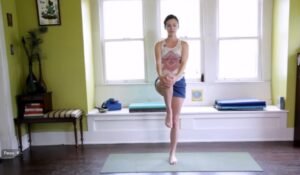
- The Foundation: The Standing Foot and Ankle
Everything begins at the root. The foundation of Tree Pose is the standing foot. The goal is to create a stable, tripod-like base by pressing down evenly through the four corners of the foot: the ball of the foot behind the big toe, the ball of the foot behind the pinky toe, and both sides of the heel. This active engagement of the foot’s arch wakes up the muscles of the lower leg and creates a solid platform. A common error is to grip the floor with the toes or roll onto the outer edge of the foot; instead, the weight should be centered, with the ankle joint stacked directly over the heel. - The Pillar: The Standing Leg and Core
The standing leg is not passive; it is actively firm. The quadricep is engaged, lifting the kneecap, and the muscles of the inner thigh (adductors) draw inward towards the midline of the body. This engagement stabilizes the knee joint, which is critical for safe balancing. The true secret to Tree Pose, however, lies in the core. The deep core muscles—the transverse abdominis and the pelvic floor—engage subtly, like a gentle corset, to stabilize the pelvis and prevent the lower ribs from jutting forward. This core engagement is the central pillar that connects the grounded foot to the expanding upper body. - The Branches: The Hip, Bent Knee, and Upper Body
The action of the bent knee is where alignment is most crucial. The classic beginner mistake is to place the foot directly on the side of the knee joint. This can create a lateral pressure that is unsafe for the knee ligaments. The proper placements are:
- Beginner: Place the sole of the foot on the inside of the standing ankle, with the toes gently touching the floor for support.
- Intermediate: Place the sole of the foot on the inside of the standing calf, below the knee.
- Advanced: Place the sole of the foot high on the inside of the standing thigh, above the knee.
Wherever the foot is placed, the critical action is to press the foot into the leg and the leg back into the foot with equal resistance. This isometric pressure stabilizes the hip of the bent leg and actively opens the hip joint out to the side. The hands can be at the heart center in Anjali Mudra (Prayer Position), or the arms can stretch overhead like branches reaching for the sun. If the arms are raised, the shoulders should remain relaxed down the back, away from the ears.
The Mental Landscape: Finding Stillness in the Storm
The physical challenge of Tree Pose is only half the battle. The greater, more illuminating struggle occurs in the mind. Tree Pose is a powerful mirror for our mental state. A wobble in the body almost always originates from a fluctuation in the mind.
- The Gaze (Drishti): The focal point is your anchor. By fixing your gaze on a single, non-moving point on the floor a few feet in front of you, you give your brain a stable reference point. When the body wobbles, the eyes tend to dart around, seeking external validation or comparing yourself to others. The practice of holding a steady Drishti is a practice of cultivating internal focus, training the mind to ignore distractions.
- The Breath (Pranayama): The breath is the tether between body and mind. In moments of unsteadiness, the breath often becomes shallow or is held entirely. This breath-holding triggers a stress response, increasing tension and guaranteeing a fall. The practice is to maintain a smooth, even, diaphragmatic breath—Ujjayi breath, if possible—throughout the pose. The exhale, in particular, can be used as a tool to release tension in the shoulders, jaw, and standing leg. A calm, steady breath directly cultivates a calm, steady mind.
- Embracing the Wobble: The goal of Tree Pose is not absolute, rigid stillness. That is a statue, not a tree. Trees sway in the wind; they adapt and readjust. The wobbles and micro-adjustments are not signs of failure but evidence of a living, responsive system learning to find its center. The practice is to observe the wobble without panic, to make the necessary correction with the minimal amount of effort, and to return to center without judgment. This is a profound lesson in resilience and non-attachment.

The Symbolic Roots: Vrksasana as a Metaphor for Life
The name «Tree Pose» is not arbitrary; it is deeply symbolic. The pose embodies the essential qualities of a tree, offering a powerful metaphor for personal growth and spiritual development.
- Root to Rise: This is the central teaching of Vrksasana. A tree cannot grow tall and strong without a deep, extensive root system. In the pose, we must first establish our «roots»—the connection to the earth through the standing foot, the feeling of being grounded and supported. Only from this place of stability can we then «rise»—lengthening the spine, reaching the arms toward the sky. This principle applies directly to life: we must be grounded in our values, our self-care, and our connection to the present moment before we can healthily expand, take on new challenges, and aspire to higher goals. Without strong roots, we topple under the first strong wind.
- Balance of Strength and Flexibility: A tree is both strong and flexible. Its trunk is solid, yet it can sway with the wind without breaking. In Tree Pose, we cultivate the strength of the standing leg and core, while also cultivating the flexibility to open the hip of the bent leg. The pose teaches us that true resilience is not rigid hardness, but a blend of steadfast strength and adaptable softness.
- Growth and Expansion: A tree is always growing, reaching for the light. In the same way, Tree Pose encourages an expansive energy. The crown of the head reaches upward, the fingertips extend outward, and the heart opens forward. It is a pose of optimism and upward growth, reminding us of our own potential for continuous evolution.
A Progressive Practice: Variations and Prop Use
Tree Pose is accessible to almost every body with the right approach and potential modifications.
- Using the Wall: The wall is the best prop for building confidence and understanding alignment. Start by standing with your back to the wall, or with your side to the wall, with your standing leg a few inches away. The light touch of the wall on your back, buttock, or shoulder provides the feedback needed to find vertical alignment without the fear of falling.
- Using a Block: For those with limited hip mobility or balance challenges, placing a block on the floor and resting the toes of the bent leg on it can provide a sense of stability while still allowing you to work on the upper-body actions of the pose.

- Advanced Variations: For those seeking a challenge, Tree Pose can be deepened by:
- Closing the eyes, removing the visual anchor and relying solely on proprioception.
- Taking the pose into a forward fold, bringing the torso parallel to the floor while maintaining the balance (Flying Tree Pose).
- Incorporating a bind by reaching the opposite arm behind the back to grab the inner thigh of the bent leg.
The Pose as a Practice for Life
Tree Pose, Vrksasana, is far more than a physical exercise. It is a moving meditation, a lesson in anatomy, and a philosophical guidebook. On the mat, it teaches us the mechanics of finding center amidst chaos. It shows us that stability comes not from rigidly holding on, but from a dynamic interplay of engagement and release, focus and softness.
But the true power of the pose is revealed when we step off the mat. The lessons of Vrksasana permeate our daily lives. It teaches us to find our Drishti when we feel distracted, to steady our breath when we feel anxious, and to embrace the «wobbles» of life—the unexpected challenges and setbacks—as opportunities to readjust and find our center once more.
We learn to build strong roots through mindful living so that we may rise to meet our potential without fear of falling. We learn that like a tree, we must be both strong and flexible to weather the storms. In the quiet, focused effort of standing on one leg, we practice nothing less than the art of living a balanced, grounded, and expansive life. Tree Pose is not just something we do; it is a state of being we cultivate, a reminder that within each of us lies the potential to be both deeply rooted and magnificently free.
This Other Extraordinary Publication «Yoga for Athletes: The Ultimate Cross-Training Tool for Peak Performance and Longevity» Might Interest You! Come in and check it out!!!
I hope you enjoyed this article emphasizing «Tree Pose (Vrksasana): Finding Stillness, Strength, and Symbolism on One Leg». You can share your thoughts and experiences with me in the comments section.