
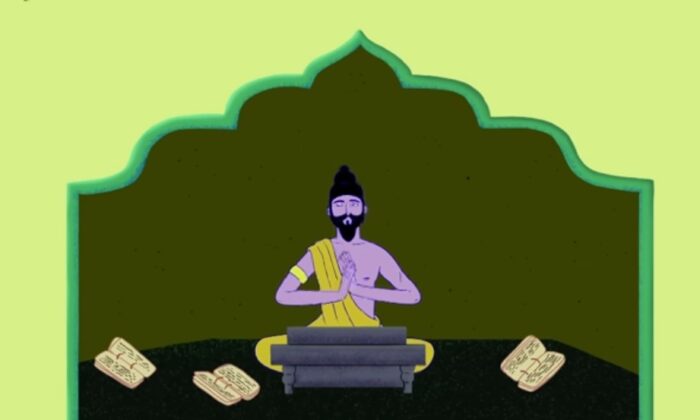
The word «yoga» conjures a kaleidoscope of images in the modern mind. For some, it is a room full of people in expensive leggings, bending their bodies into improbable shapes. For others, it is a serene figure seated in lotus position, silhouetted against a rising sun. It is marketed as a path to physical fitness, a tool for stress reduction, a spiritual quest, or simply a trendy way to spend a Saturday morning. With so many definitions, the essential question remains: What, truly, is yoga?
The answer is as vast and deep as human consciousness itself. Yoga is not merely something you do; it is a state of being you cultivate. It is a 5,000-year-old living tradition originating in ancient India, a sophisticated system for unifying the body, mind, and spirit to achieve a state of profound peace and self-awareness.
To reduce it to mere stretching is to mistake an elephant for its trunk. This article will journey beyond the physical postures to explore yoga’s philosophical roots, its multifaceted limbs, and its profound relevance as a science of well-being for the 21st century.
Beyond the Mat: The Etymological and Philosophical Foundation
The word «yoga» is derived from the Sanskrit root «yuj,» which means «to yoke,» «to unite,» or «to harness.» This simple definition holds the key to the entire practice. The union it refers to is multi-layered:
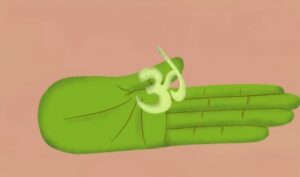
- The union of the individual self (Jivatman) with the universal consciousness (Brahman or Atman): This is the ultimate spiritual goal in many schools of yoga—the realization that the sense of being a separate, isolated ego is an illusion, and that our true nature is one with the entire cosmos.
- The union of the body and the mind: In our daily lives, the body and mind often feel like separate entities. The body might be present, but the mind is lost in the past or future. Yoga seeks to bring them into harmonious alignment, so that the mind is fully present in the bodily experience.
- The union of effort and ease: In every aspect of practice, yoga teaches the balance between disciplined action (Sthira) and surrendering relaxation (Sukha). It is the art of applying effort without creating tension.
This philosophical foundation was systematically compiled by the sage Patanjali around 400 CE in the Yoga Sutras, a collection of 196 aphorisms that serve as the guiding light for most modern yoga. Patanjali’s opening sutra offers a succinct definition: Yogas chitta vritti nirodha — «Yoga is the cessation of the fluctuations of the mind.»
The «mind-stuff» (chitta) is constantly agitated by waves (vrittis) of thoughts, emotions, memories, and desires. We identify with these waves, believing «I am angry» or «I am my thoughts.» Yoga is the process of calming this stormy sea. When the waves subside, the mind becomes like a still, clear lake, and we can perceive the depths of our own true nature, which is peace, joy, and awareness itself. This state of clarity is Samadhi, or enlightenment, the final goal of the yogic path.
The Eight Limbs of Yoga: A Blueprint for Living
To achieve this state of mental stillness, Patanjali outlined an eight-fold path known as Ashtanga Yoga (not to be confused with the modern athletic style of the same name). These eight limbs are not sequential steps but interconnected practices that guide every aspect of human life. They demonstrate that yoga is a 24/7 endeavor, far exceeding the time spent on a mat.
- Yamas (Ethical Restraints): These are moral principles governing our relationship with the external world. They include:
- Ahimsa (Non-violence): Not causing harm through thought, word, or deed, to others or to oneself.
- Satya (Truthfulness): Honesty in communication and living authentically.
- Asteya (Non-stealing): Not taking what is not freely given, including time, energy, or ideas.
- Brahmacharya (Moderation): Often translated as celibacy, but more broadly means using our energy wisely and avoiding overindulgence.
- Aparigraha (Non-possessiveness): Letting go of greed and hoarding, trusting that what we need will come.
- Niyamas (Personal Observances): These are inner disciplines for self-purification.
- Saucha (Purity): Cleanliness of body, mind, and environment.
- Santosha (Contentment): Cultivating a sense of peace and acceptance with what is.
- Tapas (Discipline): The fiery zeal of committed practice, which generates inner strength.
- Svadhyaya (Self-study): Introspection and the study of sacred texts to understand one’s true nature.
- Ishvara Pranidhana (Surrender to a higher power): Letting go of the ego and dedicating the fruits of one’s actions to the divine or a higher purpose.
- Asana (Posture): This is the limb most familiar in the West. Asana refers to the physical postures designed to cultivate strength, flexibility, and stability in the body. However, Patanjali defines asana simply as a «steady and comfortable posture.» The primary goal of the physical practice was originally to prepare the body to sit in meditation for long periods without distraction from pain or discomfort. A strong, healthy body becomes a fit vehicle for spiritual exploration.
- Pranayama (Breath Control): Prana is the vital life force energy that animates all living things. Pranayama is the science of regulating the breath to control the flow of this energy in the body. Since the breath is the bridge between the body and the mind, calming the breath directly calms the nervous system and quietens the mental chatter.
- Pratyahara (Sense Withdrawal): This is the practice of drawing the awareness inward, disengaging from the constant barrage of external stimuli (sights, sounds, smells). It is not about ignoring the senses, but about no longer being enslaved by them, allowing for profound inner focus.
- Dharana (Concentration): The practice of single-pointed focus, where the mind is fixed on one object, such as the breath, a mantra, or a candle flame.
- Dhyana (Meditation): When concentration (Dharana) becomes uninterrupted and effortless, it flows into Dhyana, a state of deep, sustained meditation where the sense of a separate self begins to dissolve.
- Samadhi (Absorption or Enlightenment): The final limb, the ultimate goal. It is a state of super-consciousness where the meditator, the process of meditation, and the object of meditation become one. The individual self merges with the universal, experiencing boundless peace and bliss.

The Modern Manifestation: Yoga in the 21st Century
Understanding the eight limbs makes it clear that the physical postures (asana) are just one-eighth of the classical path. So, how did this small facet become the face of modern yoga?
The answer lies in a wave of teachers who brought yoga to the West in the late 19th and 20th centuries. Figures like Swami Vivekananda, T. Krishnamacharya (often called the «father of modern yoga»), and his students B.K.S. Iyengar, Pattabhi Jois, and Indra Devi emphasized the physical aspects of the practice to make it accessible and appealing to a Western audience. They developed structured systems like Iyengar Yoga (focusing on precise alignment with props) and Ashtanga Vinyasa Yoga (a dynamic, flowing style) that captivated people with their physical challenge and tangible benefits.
This adaptation, while a departure from the purely spiritual goal of Samadhi, has been a gateway for millions. The scientific community has now validated what yogis have known for millennia: the physical practice of yoga has profound benefits:
- Physical: Increases flexibility, builds strength, improves cardiovascular health, and enhances bodily awareness.
- Mental: Reduces stress, anxiety, and depression; improves focus, memory, and sleep quality.
- Energetic: Balances the nervous system, boosts energy levels, and promotes a general sense of well-being.
For many, this is where the journey begins. The relief from back pain or the calm after a stressful day is the hook. But for those who delve deeper, the practice naturally begins to expand. The mindfulness cultivated on the mat starts to seep into daily life. The practitioner may find themselves more patient in traffic (practicing Ahimsa and Santosha), more mindful of their consumption (Aparigraha), or naturally drawn to sit in silence for a few minutes each day (Dhyana).
A Tapestry of Paths: The Many Styles of Yoga
The beauty of yoga is its diversity. There is a style to suit every temperament and need:
- Hatha Yoga: A broad term for any yoga that teaches physical postures. Most Western styles are a form of Hatha.
- Vinyasa Yoga: Characterized by flowing sequences linking movement with breath.
- Restorative Yoga: A deeply relaxing practice using props to support the body in passive poses, aimed at calming the nervous system.

- Kundalini Yoga: A practice focused on awakening the dormant spiritual energy at the base of the spine through dynamic breathing, movement, and chanting.
- Yin Yoga: A slow-paced style with long-held floor poses that target the deep connective tissues.
The Invitation to Wholeness
So, what is yoga? It is a philosophy and a science. It is a spiritual path and a practical tool for mental health. It is a rigorous physical discipline and a gentle practice of self-care. It is the journey from the periphery of the body to the core of being.
It begins with showing up on the mat, but its ultimate destination is how we show up in the world. It is an invitation to move from fragmentation to integration, from reactivity to responsiveness, from identifying with the turbulent waves of the mind to resting in the silent depths of the ocean beneath.
Yoga does not ask you to become someone else; it invites you to remember who you truly are: a being of peace, connected to all of life. Whether you are drawn to it for a stronger back, a quieter mind, or a deeper connection to the universe, the path is the same. It starts with a single breath, a moment of awareness, and the courageous decision to yoke yourself to your own highest potential.
This Other Extraordinary Publication «Yoga for Runners: The Ultimate Guide to Unlocking Strength and Flexibility» Might Interest You! Come in and check it out!!!
I hope you enjoyed this article emphasizing «What is Yoga? Unraveling the Threads of an Ancient Practice for a Modern World». You can share your thoughts and experiences with me in the comments section.