
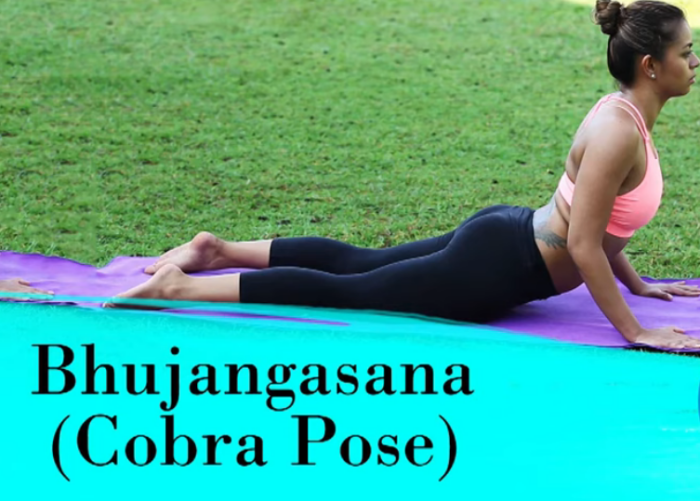
In the rich tapestry of yoga asanas, few poses are as deceptively simple and profoundly transformative as Cobra Pose, or Bhujangasana. It is often one of the first backbends a practitioner encounters, a gentle introduction to the art of spinal extension.
Yet, to dismiss it as a mere «beginner’s pose» is to overlook its deep therapeutic power and symbolic resonance. The image of the cobra, hood flared, poised and alert, is not one of aggression but of potent, awakened energy. In yoga, this pose embodies the uncoiling of this very energy—the Kundalini Shakti—that lies dormant at the base of the spine.
Bhujangasana is a masterclass in nuance. It teaches the fundamental language of a healthy backbend: the delicate balance between effort and ease, the integration of the legs, and the crucial distinction between lifting and crunching. It is a pose that can soothe an achy back, open a constricted heart, and combat the postural malaise of modern life.
This article will delve into the multifaceted world of Cobra Pose, exploring its anatomical intelligence, its vast therapeutic applications, its symbolic depth, and the precise, step-by-step alignment that transforms it from a simple arch of the back into a powerful conduit for vitality and emotional release.
The Anatomy of an Awakening: Deconstructing the Gentle Backbend
A safe and effective Cobra Pose is a symphony of integrated muscular engagement. The common misconception is that it is solely a lower back bend. In reality, a refined Bhujangasana distributes the extension evenly throughout the entire vertebral column, with a primary focus on the often-neglected thoracic spine.
- The Foundation: Legs and Pelvis as the Root
The journey of a healthy backbend begins not in the spine, but in the legs. The lower body provides the stable foundation from which the spine can safely lift.
- Leg Engagement: The legs are actively engaged, with the tops of the feet pressing firmly into the mat. The quadriceps (front thigh muscles) are contracted, lifting the kneecaps. This action stabilizes the pelvis and prevents the compression that occurs when the legs are passive.
- Pelvic Positioning: The pubic bone gently presses into the floor. This subtle posterior tilt of the pelvis helps to lengthen the lumbar spine (the lower back), creating space between the vertebrae before the lift even begins. It is the first and most important action to protect the sensitive sacroiliac joint.
- The Engine: Core and Back Integration
The lift is not a passive «dropping» into the back, but an active «unfurling» powered by the muscles of the back and core.
- Spinal Erectors: These are the long muscles that run parallel to the spine. In Cobra, they contract to lift the chest. The focus should be on feeling this engagement along the entire back, particularly between the shoulder blades, to encourage thoracic extension.
- The Gluteal Muscles: The glutes are gently engaged. Over-squeezing can lock the sacrum and limit mobility, but a mild engagement helps to support the lift and stabilize the pelvis.
- The Abdominals: The core is not switched off; it is actively involved. A gentle engagement of the lower abdominals provides a supportive «girdle» for the lumbar spine, preventing it from bearing the brunt of the bend. The navel draws slightly in and up.
- The Expansion: Shoulders, Chest, and Neck
The upper body in Cobra is the blossoming flower, the expression of the pose’s heart-opening quality.
- Shoulder Blades: A key action is to draw the shoulder blades down the back and toward each other. This retraction and depression of the scapulae opens the chest forward and prevents the shoulders from hunching up toward the ears.
- Arms: The arms are often misunderstood. In a true Bhujangasana, the arms are not the primary source of lift. They are guides and supporters. The elbows stay hugged into the sides of the body, and the hands press into the mat primarily to protect the lower back by preventing over-lifting. The sensation should be that the back muscles are lifting the chest, and the hands are simply there for support.
- Neck and Head: The gaze, or Drishti, is forward or slightly upward, but the neck should be a natural extension of the spine. There should be no crunching in the back of the neck. Imagine lengthening the crown of your head forward and up, creating as much space as possible between your vertebrae.

The Therapeutic Embrace: Bhujangasana as a Healing Posture
The physical alignment of Cobra Pose translates directly into a wide array of therapeutic benefits, making it a cornerstone of both restorative and rehabilitative yoga.
- Countering the Modern Posture: In an age dominated by smartphones and computers, the human body has adopted a universal forward-flexed posture—rounded shoulders, a forward-head position, and a collapsed chest. Cobra Pose is the perfect antidote. It actively reverses this pattern, strengthening the muscles of the upper back, opening the chest and shoulders, and restoring the spine’s natural curves. Regular practice can alleviate tension headaches, neck pain, and upper back stiffness associated with «tech neck.»
- Spinal Health and Disc Integrity: The gentle, controlled extension of Cobra can be beneficial for spinal health. It encourages hydration of the intervertebral discs by creating a pump-like action that draws in nutrients. For those with certain types of lower back pain (like a posterior disc bulge), this extension can help centralize the disc material, potentially providing relief. However, it is crucial to consult a healthcare provider for any specific back condition.
- Respiratory and Emotional Liberation: The chest cavity is the home of the heart and lungs. By physically opening the anterior thorax, Cobra Pose creates more space for the lungs to expand, improving respiratory capacity. This physical opening is intimately linked with our emotional state. The chest and heart center (Anahata Chakra) are associated with feelings of love, joy, and vulnerability. A closed, protected chest can be a physical manifestation of emotional guarding. Practicing heart-openers like Bhujangasana can, over time, help to release stored emotional tension, foster a sense of confidence, and counteract feelings of depression or anxiety.
The Symbolic Serpent: Kundalini and the Sushumna Nadi
The name Bhujangasana is derived from the Sanskrit word «Bhujanga,» meaning serpent or snake. This is deeply symbolic in yogic philosophy. The pose mirrors the raised hood of a king cobra—poised, alert, and filled with potent energy.
This symbolism is directly linked to the concept of Kundalini Shakti. In tantric yoga, Kundalini is envisioned as a coiled serpent resting at the base of the spine (the Muladhara Chakra). Through spiritual practice, this dormant spiritual energy is awakened and begins to ascend the central energy channel, the Sushumna Nadi, which runs along the spinal column.
Each backbend, and Cobra Pose in particular, is a physical invocation of this process. The sequential lifting of the spine from the tailbone to the crown of the head mimics the upward uncoiling of the Kundalini energy. The pose is not just a stretch; it is a ritual for awakening our latent potential, vitality, and consciousness, moving it from the realm of primal instinct toward the seat of higher awareness.
A Practice for Every Body: Variations and Progressions
The beauty of Bhujangasana lies in its accessibility. It can be adapted for every level of practice and physical condition.
- For the Beginner or Those with Back Sensitivity:
- Sphinx Pose (Salamba Bhujangasana): This is the perfect preparatory pose. Lie on your belly and prop yourself up on your forearms, with your elbows directly under your shoulders. This provides more support and allows you to focus solely on the upper back extension without the intensity of a full Cobra.
- Low Cobra: Keep the arms bent and only lift a few inches off the floor. The focus is entirely on using the back muscles, with the hands providing minimal push.

- For Deepening the Practice:
- Full Cobra: As strength and flexibility increase, you can straighten the arms more. Remember, the goal is not how high you can push with your arms, but how much you can lift your chest using your back. The pubic bone should never leave the floor.
- Adding a Twist: From a low Cobra, walk your hands over to the right side and then the left, creating a gentle, twisting backbend that mobilizes the spine in multiple planes.
The Poised Power of the Cobra
Cobra Pose, Bhujangasana, is a timeless teacher. It instructs us in the fundamental principles of safe and intelligent backbending, principles that are essential for a lifelong, injury-free practice. It reminds us that true strength is not about how high we can arch, but about the integrated, mindful effort of the entire body working in harmony.
Beyond the anatomy, it offers a powerful metaphor for our own personal evolution. Just as the cobra sheds its skin, the practice invites us to shed the physical and emotional armor we accumulate—the slouch of defeat, the guarded heart, the stiffened spine of resistance. With each gentle lift, we are not just strengthening our back; we are cultivating the poised alertness, inner vitality, and open-hearted courage of the serpent itself. We are learning to rise, with grace and power, to meet the world.
This Other Extraordinary Publication «Corpse Pose (Savasana): The Ultimate Practice of Conscious Surrender» Might Interest You! Come in and check it out!!!
I hope you enjoyed this article emphasizing «Cobra Pose (Bhujangasana): Uncoiling the Spine, Opening the Heart, and Awakening Inner Vitality». You can share your thoughts and experiences with me in the comments section.