
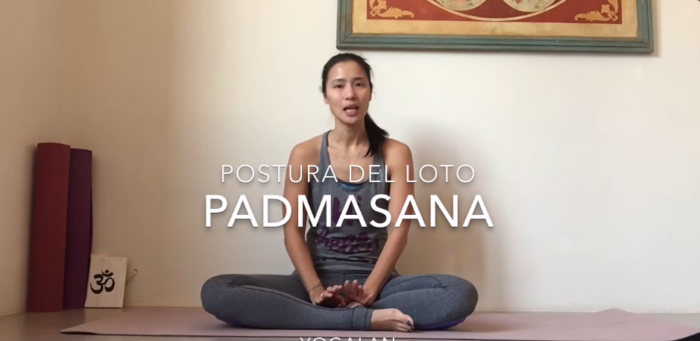
In the collective imagination, there is no more iconic image of yoga than that of a practitioner seated in Lotus Pose, spine erect, hands resting gently on the knees, eyes closed in a state of deep, tranquil absorption. This is Padmasana, the quintessential meditation posture, a symbol of peace, enlightenment, and the very essence of the yogic journey.
Yet, for many in the West, this image exists as a paradox: it represents the ultimate goal of inner stillness while simultaneously appearing as an inaccessible, almost painful physical contortion. To view Lotus Pose as merely a «deep stretch for the hips» is to fundamentally misunderstand its purpose.
Padmasana is not a destination, but a vehicle. It is a sacred geometry of the body, designed to facilitate the free flow of energy, steady the mind, and provide the stable foundation from which one can explore the vast inner universe.
This article will embark on a comprehensive exploration of the Lotus, moving beyond the external form to understand its profound anatomical, energetic, and philosophical significance. We will demystify the prerequisites for this advanced pose, outline a compassionate and intelligent path toward its achievement, and illuminate why, for thousands of years, it has been revered as the supreme asana for meditation and spiritual practice.
The Symbolic Roots: Padmasana as a Universal Archetype
The name itself is deeply symbolic. «Padma» means lotus, a flower of immense spiritual significance across Eastern traditions. The lotus grows in muddy, murky waters, yet it emerges pristine and beautiful, untainted by its environment. It symbolizes the journey of the soul: rooted in the material world (the mud), it strives through the waters of experience to blossom into the radiant light of spiritual awakening (the flower).
Sitting in Padmasana is an act of embodying this symbolism. The crossed legs represent the roots, grounded in the earth. The erect spine is the stem, reaching upward. The open chest and calm mind are the flower, blooming toward the divine. It is a physical declaration of the practitioner’s intention to rise above the «mud» of worldly distractions, attachments, and suffering to achieve a state of purity and enlightenment.
In Hindu and Buddhist iconography, deities and enlightened beings are almost universally depicted seated in Lotus Pose, signifying their perfect balance, immutable stability, and mastery over the physical and spiritual realms. It is the throne of the awakened mind.
The Anatomical Blueprint: Deconstructing the «Perfect» Seat
The physical form of Lotus Pose is a masterpiece of biomechanical integration. It requires a delicate and balanced combination of mobility and stability from several key joints.
- The Hip Joint: The Gateway to Padmasana
The primary physical requirement for Lotus Pose is external rotation of the hip joints. This is the single greatest obstacle for most practitioners. The hip is a ball-and-socket joint. For the leg to fold into Lotus, the femur (thigh bone) must be able to rotate outwardly in the socket to a significant degree. This rotation is governed by the flexibility of several deep external rotator muscles (like the piriformis) and the laxity of the ligaments.
It is crucial to understand that the pose should never force the knee. The knee is a hinge joint, designed primarily for flexion and extension, not rotation. Any sensation of sharp pain, pinching, or pulling in the knee is a clear signal from the body to stop immediately. Forcing the knee into Lotus can lead to serious, long-term damage to the meniscus and ligaments. The mobility must come from the hips, not the knees.
- The Ankle and Knee: The Supportive Hinges
Once sufficient hip external rotation is achieved, the ankles and knees must have the healthy flexibility to accommodate the deep flexion. The top foot should nestle into the hip crease without the ankle buckling painfully. The knees, while bearing a gentle stretch, should feel supported and free from torsion. - The Spine and Pelvis: The Pillar of Meditation
The ultimate purpose of Padmasana is to allow for a comfortable, upright, and effortless seated posture for meditation. This requires a neutral pelvis. If the hips are too tight, the pelvis will tilt backward, causing the lower back to round (posterior pelvic tilt). This makes it impossible to sit with a long, straight spine without immense effort. A neutral pelvis allows the spinal column to stack naturally, from the sacrum to the crown of the head, creating a stable and relaxed container for the central nervous system.
The Energetic Architecture: Sealing the Life Force
In yogic philosophy, Padmasana is more than a physical shape; it is a circuit for prana, the vital life force. The pose is designed to facilitate the movement of this energy along the central channel, the Sushumna Nadi, which runs along the spine.
- The Locked Circuit: The crossed legs and the placement of the feet on the thighs create a «locked» posture. This containment is believed to prevent the dissipation of pranic energy out through the limbs, redirecting it inward and upward along the spine.
- The Mudra of the Hands: The classic hand position in Lotus is Jnana Mudra or Chin Mudra, where the tip of the thumb and index finger touch, forming a circle. This gesture symbolizes the union of individual consciousness (the index finger) with universal consciousness (the thumb). The completed circuit of the mudra, combined with the locked legs, creates a powerful, self-contained energetic loop, minimizing distraction and maximizing the potential for internal focus.
- The Nadis and the Chakras: The pose is said to balance the flow of energy through the Ida (lunar) and Pingala (solar) nadis, the subtle energy channels that crisscross the spine. This balance stills the fluctuations of the mind and awakens the Chakras, the energy centers, beginning the process of Kundalini arousal.

The Path to the Lotus: A Compassionate and Intelligent Progression
Achieving a safe and sustainable Lotus Pose is a journey of years, not weeks. It requires patience, consistency, and, above all, a non-attached attitude (Vairagya). The goal is not to force the body into a shape, but to prepare the body so the pose can unfold naturally.
Stage 1: Cultivating Hip Intelligence (The Foundation)
This stage involves developing awareness and mobility in the hips through consistent, gentle practice.
- Butterfly Pose (Baddha Konasana): A fundamental pose for groin and hip opening. Focus on lengthening the spine and gently encouraging the knees toward the floor with the engagement of the hip muscles, not by pushing.
- Fire Log Pose (Agnistambhasana): A more intense precursor to Lotus. It closely mimics the leg position and provides direct feedback on the external rotation capacity of each hip.
- Pigeon Pose (Eka Pada Rajakapotasana) and its variations: Excellent for targeting the deep external rotators of the rear hip.
- Squat (Malasana): Helps to open the hips and ankles simultaneously.
Stage 2: Preparing the Knees and Ankles Safely
- Half Lotus (Ardha Padmasana): This is the most important preparatory pose. Sit with one leg folded in (as in Simple Cross-Legged), and the other foot placed on the opposite thigh. It allows you to assess the readiness of each hip individually. Always practice this pose symmetrically, spending equal time on each side.
- Ankle Rotations and Mobilizations: Gently rotating the ankles and flexing and pointing the feet maintains healthy joint function.
Stage 3: Approaching Full Lotus
Only when Half Lotus is comfortable and completely free from knee sensation should one consider moving toward the full pose.
- The Transition: From Half Lotus, carefully guide the bottom foot onto the top of the opposite thigh. This should be a slow, mindful, and controlled movement. If there is any resistance in the knee, stop.
- Use of Props: Sitting on the edge of a firm cushion or folded blanket is not a sign of weakness; it is an act of intelligence. Elevating the hips helps to tilt the pelvis forward, making it easier to maintain a straight spine and reducing strain on the knees.
The Contradictions and Cautions: Honoring Your Body’s Truth
Lotus Pose is an advanced asana with specific contraindications. It should be avoided or approached only under the guidance of an experienced teacher by individuals with:
- Knee injuries: Any history of meniscus tears, ligament damage, or arthritis.
- Hip issues: Such as hip replacements, impingement, or bursitis.
- Ankle injuries.
- Sciatica or severe low back pain.
- Pregnancy: Due to the hormone relaxin, which increases ligament laxity, making the joints more vulnerable.
Beyond the Physical: The Lotus as a State of Mind
Ultimately, the true mastery of Padmasana has little to do with how perfectly your legs are entwined. The physical form is merely the container. The real practice begins once the body is still.
The pose creates the ideal conditions for Pratyahara (sense withdrawal), Dharana (concentration), and Dhyana (meditation). The locked, stable posture minimizes physical feedback to the brain. With the body at ease, the mind is no longer distracted by discomfort and can turn its attention fully inward. The steady, upright spine allows for effortless breathing and the smooth flow of neural impulses.

The greatest lesson of the Lotus is one of non-attachment. The journey toward it teaches humility, patience, and self-acceptance. It forces you to listen to the subtle language of your body, to respect its limits, and to celebrate its unique architecture.
For some, a perfect, effortless Lotus may never be possible, and that is perfectly okay. The goal is not the pose itself, but the state of being it facilitates: a mind that is calm, clear, and undisturbed, like the surface of a still lake—a mind in bloom.
The Blossoming Within
Padmasana, the Lotus Pose, is the ultimate symbol of the yoga practice itself. It represents the harmonious integration of the physical and the spiritual, the journey from gross to subtle, from fragmentation to wholeness. It is a posture that demands everything of you—your flexibility, your strength, your patience, and your humility—and offers in return the silent, spacious throne of your own awareness.
Whether you ever achieve the full physical expression of the pose is secondary. The true blossoming occurs within. Each time you sit to meditate, whether in a perfect Lotus, a simple cross-legged position, or even in a chair, you are planting the seed of that lotus. By committing to the practice, to the breath, and to the stillness, you nurture that seed. And in the quiet moments of profound inner peace, regardless of the position of your legs, you realize that the lotus has been blooming within you all along.
This Other Extraordinary Publication «Tree Pose (Vrksasana): Finding Stillness, Strength, and Symbolism on One Leg» Might Interest You! Come in and check it out!!!
I hope you enjoyed this article emphasizing «Lotus Pose (Padmasana): Unfurling the Physical, Energetic, and Symbolic Heart of Yoga». You can share your thoughts and experiences with me in the comments section.