
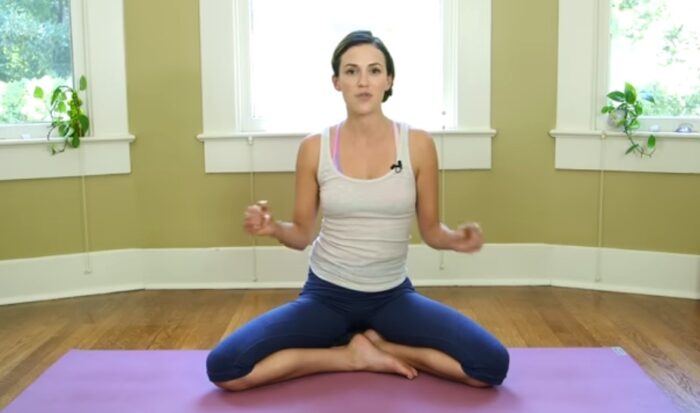
In this landscape of discomfort, a 5,000-year-old practice offers a profoundly modern and effective solution: yoga. Yet, the suggestion to try yoga for a bad back can often be met with skepticism. Images of complex twists and deep backbends may seem like the last thing an aching spine needs. However, the application of yoga for back pain is not about forcing the body into pretzel-like shapes.
Back pain is a universal language of suffering. It is a relentless, grinding ache that can color every moment of the day, or a sharp, stabbing shock that steals your breath with the slightest movement. It is the leading cause of disability worldwide, an epidemic that drives millions to doctors’ offices, physical therapists, and pharmacy shelves in search of relief. For many, the journey is frustrating, involving temporary fixes, powerful medications, and sometimes, the resigned advice to simply «live with it.»
It is a sophisticated, science-backed approach that addresses the root causes of pain, restoring balance, strength, and mobility. It is a journey from feeling like a victim of your own body to becoming the active agent of your healing.
This article will explore the multifaceted ways in which yoga alleviates back pain, moving beyond the simplistic idea of «stretching a tight muscle.» We will delve into the anatomy of back pain, the therapeutic principles of a yoga practice, and provide a detailed, safe guide to poses that can help you reclaim a life free from pain.
Understanding the Ache: The Complex Anatomy of Back Pain
To understand why yoga works, we must first understand what we are dealing with. The back is not a single entity but a complex structure of interconnected parts:
- Vertebrae: The stack of bones that form the spine.
- Intervertebral Discs: The soft, gel-like cushions between the vertebrae that act as shock absorbers.
- Muscles: A layered network of large muscles (like the erector spinae) and smaller, deeper stabilizers (the multifidus and transverse abdominis).
- Ligaments and Tendons: Connective tissues that hold the bones together and attach muscles to bones.
- Nerves: The spinal cord running through the vertebral column, with nerve roots branching out to the entire body.
Pain can originate from any of these structures. Common causes include:
- Muscular Strain: Overstretching or tearing of muscles or tendons, often from acute injury or poor lifting mechanics.
- Ligament Sprain: Overstretching or tearing of ligaments.
- Disc Issues: A bulging or herniated («slipped») disc that can press on a nerve.
- Degenerative Changes: Wear-and-tear like osteoarthritis or spinal stenosis.
- Poor Posture and Movement Patterns: Perhaps the most common culprit. Chronic slouching, sitting for prolonged periods, and weak core muscles lead to imbalances where some muscles become tight and overworked (e.g., hamstrings, hip flexors, lower back muscles) while others become weak and inactive (e.g., glutes, deep abdominals).
This last point is critical. The pain is often not where the problem is. Tight hip flexors from sitting can pull on the pelvis, tilting it forward and creating an exaggerated arch in the lower back (lordosis), which strains the lumbar muscles.
Weak glutes fail to stabilize the pelvis during walking, forcing the lower back muscles to overcompensate. This is where yoga shines—it doesn’t just treat the symptom (the ache in the back); it addresses the systemic imbalances that caused it.
The Therapeutic Principles of Yoga for Back Pain: More Than Just a Stretch
A therapeutic yoga practice for back pain is built on several key principles that differentiate it from a generic fitness class.
- Strengthening the Core: The Inner Corset
The term «core» is often misunderstood as the superficial «six-pack» muscles (rectus abdominis). For spinal health, the most important core muscles are the deep stabilizers: the transverse abdominis (TVA), which wraps around the torso like a corset, and the multifidus, a series of small muscles that stabilize each vertebra. A weak core is like a building with a shaky foundation. Yoga poses like Boat Pose (Navasana) and Plank teach you to engage these deep muscles, creating natural stability and taking the pressure off the spine. - Creating Space and Decompression
The spine is naturally compressed by gravity and sedentary postures. Many yoga poses create traction, gently pulling the vertebrae apart to create space for the discs and relieve nerve pressure. Forward folds and inversions like Legs-Up-the-Wall (Viparita Karani) use gravity to gently elongate the spine. - Improving Proprioception: Re-educating the Body
Proprioception is your body’s ability to sense its position in space. Chronic pain can dull this sense, leading to clumsy, destabilizing movements. Yoga, with its emphasis on precise alignment and balance, re-educates the nervous system. It rebuilds the brain-body connection, teaching you to move in a way that protects your back in everyday life. - Calming the Nervous System
Pain and stress create a vicious cycle. Pain causes stress and anxiety, which tenses the muscles, which in turn creates more pain. Yoga activates the parasympathetic nervous system—the «rest and digest» mode—through slow, mindful movement and deep, conscious breathing (pranayama). Breaking the stress-pain cycle is a fundamental part of healing. - Cultivating Mindfulness and Body Awareness
Yoga teaches you to listen to your body. You learn to distinguish between the productive sensation of a stretch and sharp, shooting pain—a crucial skill for practicing safely. This awareness allows you to adjust your posture while sitting, standing, and lifting, preventing re-injury.

A Safe Practice: Essential Guidelines Before You Begin
Safety is paramount. If you have acute, severe, or specific back pain (especially with radiating symptoms like sciatica), consult a doctor or physical therapist before starting any new exercise regimen.
- Avoid Pain: Never push into sharp, shooting, or electrical pain. The sensation should be a gentle stretch or a mild intensity, not agony.
- Focus on Micro-Movements: Sometimes, the most powerful movements are the smallest. Pay attention to subtle engagements.
- Use Props: Blocks, straps, bolsters, and blankets are not for beginners; they are tools for intelligence. They make poses accessible and safe by providing support and enabling proper alignment.
- Breathe: Never hold your breath. Deep, diaphragmatic breathing helps relax the muscles and oxygenate the tissues.
The Yoga for Back Pain Toolkit: Key Poses for Relief and Resilience
The following poses are generally safe and beneficial for most common types of non-specific low back pain. Move slowly and mindfully.
Phase 1: Gentle Movement and Awareness (Cat-Cow – Marjaryasana/Bitilasana)
This is the quintessential warm-up for the spine. It mobilizes the entire vertebral column, bringing circulation and awareness to each segment.
- How to: Come to your hands and knees in a tabletop position. As you inhale, drop your belly, lift your gaze, and arch your spine into Cow Pose. As you exhale, round your spine toward the ceiling, tuck your chin to your chest, and engage your abdominals for Cat Pose. Flow between these two shapes for 10-15 rounds, letting your breath guide the movement.
Phase 2: Strengthening the Core and Stabilizers
- Bird-Dog Pose: From tabletop, extend your right arm forward and your left leg back, keeping your hips and shoulders level to the floor. Hold for a few breaths, engaging your core to prevent wobbling. This pose builds phenomenal cross-body stability, essential for a healthy back. Switch sides.
- Modified Plank Pose: From tabletop, step your feet back to come into a plank position on your knees (not your toes). Ensure your shoulders are directly over your wrists and your body forms a straight line from your head to your knees. Hold for 5-10 breaths, focusing on engaging your TVA by drawing your navel toward your spine.
Phase 3: Releasing Tension and Creating Space
- Thread the Needle Pose (Parsva Balasana): A gentle twist and shoulder opener that releases tension in the upper back and glutes. From tabletop, slide your right arm under your left arm, lowering your right shoulder and temple to the mat. Hold for 5-8 deep breaths, then switch sides.
- Sphinx Pose (Salamba Bhujangasana): A gentle backbend that strengthens the muscles along the spine and encourages healthy lumbar curvature. Lie on your belly, prop yourself up on your forearms with your elbows under your shoulders. Gently press your pubic bone into the floor to support your lower back. Hold for 5-10 breaths.
- Supine Spinal Twist (Supta Matsyendrasana): A deeply relaxing twist that releases the paraspinal muscles and stretches the glutes. Lie on your back, hug your right knee into your chest, and gently guide it across your body to the left. Keep both shoulders grounded. Hold for 10-15 deep breaths per side.
Phase 4: Restorative and Decompressive Poses
- Legs-Up-the-Wall Pose (Viparita Karani): The ultimate pose for relaxation and spinal decompression. Sit sideways with your right hip against a wall. Swing your legs up the wall as you lie back. Place a small pillow under your hips if desired. Rest your arms by your sides, palms up. Stay for 5-15 minutes, focusing on releasing all tension with each exhale.
- Supported Child’s Pose (Balasana): A deeply calming pose that provides a gentle traction for the spine. Kneel on the floor, touch your big toes together, and sit on your heels. Separate your knees wide and place a bolster or stack of pillows lengthwise between your thighs. Fold forward to rest your torso and head on the support. Surrender completely.
Building a Sustainable Practice: A Sample Sequence
A short, consistent practice is more effective than an occasional long one. Try this 15-20 minute sequence daily or every other day:

- Centering (2 mins): Lie on your back with knees bent (Constructive Rest Position). Place your hands on your belly and feel your breath.
- Cat-Cow (10 rounds): To warm up the spine.
- Bird-Dog (5 breaths per side): For stability.
- Modified Plank (5 breaths): For core strength.
- Thread the Needle (5 breaths per side): For upper back release.
- Sphinx Pose (5 breaths): For gentle extension.
- Supine Spinal Twist (10 breaths per side): For integration.
- Legs-Up-the-Wall (5-10 mins): For final relaxation and decompression.
Reclaiming Your Body, Breath by Breath
Yoga for back pain is not a quick fix; it is a re-education. It is a journey of learning to move, breathe, and live in a way that supports, rather than strains, the intricate architecture of the spine. It empowers you with the knowledge that you are not powerless against your pain. You have the tools—the breath, the mindful movement, the awareness—to influence your own well-being.
The path from agony to agency is walked one mindful breath, one gentle movement at a time. By stepping onto the mat with patience and self-compassion, you begin to untangle the physical and emotional knots that contribute to suffering. You build a back that is not just pain-free, but resilient, strong, and supported—a foundation for a more vibrant and active life.
This Other Extraordinary Publication «Yoga for Weight Loss: A Holistic Path to Sustainable Transformation» Might Interest You! Come in and check it out!!!
I hope you enjoyed this article emphasizing «Yoga for Back Pain: A Journey from Agony to Agency». You can share your thoughts and experiences with me in the comments section.