
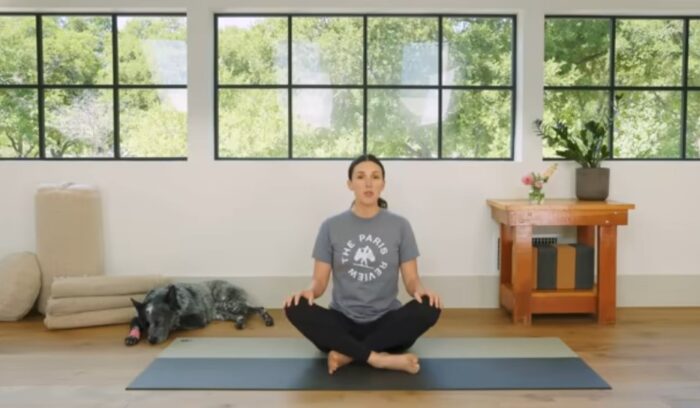
The image is pervasive: a serene yogi, folded into a pretzel-like pose, embodying flexibility and calm. For decades, this has been the dominant perception of yoga in the Western world—a practice synonymous with stretching, relaxation, and stress relief. To the uninitiated, particularly those steeped in the culture of weightlifting and high-intensity interval training, yoga can appear passive, even gentle.
The concept of «yoga for strength» seems, to some, a contradiction in terms. How can a practice that doesn’t involve external weights, clanging iron, or explosive movements possibly build real, functional strength?
This perception, however, is a profound misconception. Yoga is not merely a supplement to a strength training regimen; it is a complete and potent strength-building discipline in its own right. The strength it cultivates is not the isolated, bulging muscle of a bodybuilder, but a more intelligent, resilient, and holistic power—what ancient yogis would have called Sthira Sukham Asanam, a seat that is both steady and comfortable, or strength with ease.
This article will dismantle the myth of yoga as a solely flexibility-based practice and explore the intricate science and philosophy behind its ability to forge formidable strength, from the deep stabilizers of the core to the unshakeable fortitude of the mind.
Redefining Strength: Beyond Bulk to Integrated Power
To understand how yoga builds strength, we must first expand our definition of the term. In conventional weight training, strength is often measured by one’s ability to move an external load—the one-rep max on a bench press or the amount of weight lifted in a squat. This is undoubtedly a valid form of strength, but it is primarily concentric (muscle shortening) and often focuses on major muscle groups in isolation.
Yoga, conversely, specializes in building integrated strength. This involves:
- Isometric Contraction: The foundation of yoga’s strength-building mechanism is the isometric hold. Unlike concentric movements (lifting a weight) or eccentric movements (lowering a weight), isometric contractions involve holding a position under tension without changing the muscle length. Poses like Plank, Chair Pose, and Warrior II require you to sustain muscular engagement for several breaths. This type of contraction is exceptionally effective for building muscular endurance and tendon strength, which are crucial for joint stability and injury prevention.
- Eccentric Control: While less obvious, yoga is rich with eccentric loading. Consider the slow, controlled descent from a high lunge into a runner’s lunge, or the deliberate lowering from Plank to Chaturanga Dandasya (Four-Limbed Staff Pose). This eccentric control, where the muscle lengthens under tension, is a primary driver of muscular strength and hypertrophy (growth) and is a key component of building resilient tissue.
- Stabilizer Engagement: This is where yoga truly shines. While a bicep curl isolates the bicep, a pose like Side Plank (Vasisthasana) demands that the entire side body, from the foot to the shoulder, fires in unison to prevent collapse. It engages the often-neglected obliques, quadratus lumborum, and gluteus medius. This type of integrated work builds a «web» of strength, where stability is created not by one dominant muscle, but by a symphony of synergists and stabilizers working together. This functional strength is directly applicable to real-world movements, from carrying groceries to preventing a fall.
- Proprioception and Neuromuscular Connection: Strength is not just about muscle size; it’s about the nervous system’s ability to recruit muscle fibers efficiently. Yoga, with its emphasis on precise alignment and balance, dramatically improves proprioception—the body’s awareness of its position in space. This refined connection allows the brain to communicate more effectively with the muscles, leading to more powerful and coordinated movements, both on and off the mat.
The Pillars of Yogic Strength: Key Areas of Development
A consistent yoga for strength practice builds a unique and comprehensive strength profile. Let’s break down the primary areas of development.
- Core Strength: The Engine of Power
Forget countless crunches. Yoga builds a core that is both powerful and functional. The core in yoga is not just the rectus abdominis («six-pack» muscles); it is the entire cylinder of support, including the deep transverse abdominis (the body’s natural weight belt), the obliques, the multifidus muscles along the spine, the pelvic floor, and the diaphragm.
- Poses that Build it: Boat Pose (Navasana) is a master class in core integration, requiring the deep core to prevent the lower back from rounding. Plank Pose (Phalakasana) and its myriad variations (Side Plank, Forearm Plank) build incredible endurance. Arm balances like Crow Pose (Bakasana) demand a rounding of the upper back and a fierce engagement of the lower abdominals to lift the feet off the ground. This is core strength for a purpose: to stabilize, lift, and move the body as a single unit.
- Upper Body Strength: Beyond Push-Ups
The common belief that yoga neglects the upper body is quickly dispelled the first time one attempts to hold a solid Chaturanga Dandasya or float into Handstand (Adho Mukha Vrksasana). Yoga uses the body’s own weight as resistance to build substantial strength in the shoulders, chest, back, and arms.
- Poses that Build it: Chaturanga is the yogic equivalent of a tricep push-up, building foundational pushing strength. Downward-Facing Dog (Adho Mukha Svanasana) strengthens the deltoids and serratus anterior while decompressing the spine. Arm Balances like Crow Pose, Eight-Angle Pose (Astavakrasana), and Peacock Pose (Mayurasana) require immense strength in the wrists, arms, and core. Inversions like Handstand and Forearm Stand (Pincha Mayurasana) represent the pinnacle of upper body and core integration, demanding total body control.
- Lower Body Strength: The Foundation of Stability
The lower body is the bedrock of a strong yoga practice. While running and cycling build endurance in the legs, yoga builds a different kind of strength—one of stability, endurance, and explosive power from a deep squat position.
- Poses that Build it: Chair Pose (Utkatasana) is essentially a sustained isometric squat that ignites the quadriceps, glutes, and calves. The Warrior Poses (Virabhadrasana I, II, III) are unparalleled for building single-leg strength, stability, and muscular endurance in the hips and thighs. Bridge Pose (Setu Bandha Sarvangasana) and Wheel Pose (Urdhva Dhanurasana) are powerful backbends that activate the entire posterior chain, especially the glutes and hamstrings, which are critical for pelvic stability and powerful movement.
- Mental and Connective Tissue Strength: The Unseen Fortitude
Perhaps the most profound strength yoga builds is not visible in a mirror.
- Mental Fortitude: Holding a challenging pose for five, ten, or twenty breaths is a practice in mental resilience. It teaches the practitioner to observe discomfort without panic, to steady the breath under duress, and to find a calm focus amidst physical intensity. This «strength of mind» is invaluable, translating directly to increased willpower, focus, and emotional regulation in daily life.
- Connective Tissue Strength: The long, sustained holds and bodyweight resistance of yoga place a healthy stress on ligaments, tendons, and fascia. This stimulation strengthens these connective tissues, making them more resilient to the strains and pulls of daily life and other athletic pursuits. This is a crucial, yet often overlooked, aspect of injury prevention and long-term joint health.

The Science of Strength: Progressive Overload on the Mat
Skeptics might still ask: «Without adding weight, how can you get stronger?» The answer lies in the yogic principle of progressive overload, achieved not by adding plates to a bar, but by intelligently progressing through asanas.
- Leverage and Gravity: The primary tool for increasing intensity in yoga for strength is manipulating the body’s levers. A simple leg lift is easy. Lifting that same leg straight in Handstand (Urdhva Prasarita Eka Padasana) is exponentially harder because gravity acts on the entire body weight. As a practitioner advances, they learn to shift their center of gravity, making poses more challenging.
- Transitional Flow (Vinyasa): A static hold of Chair Pose is difficult. Flowing dynamically between Chair Pose and a standing forward fold, then back to Chair, adds a cardiovascular and muscular endurance component, increasing the metabolic demand and strength-building effect.
- Duration of Holds: Simply holding a pose for longer periods is a direct form of progressive overload. Moving from three breaths in a Plank to ten breaths builds significant endurance and strength in the core and shoulders.
- Complexity and Balance: Progressing from a stable, two-legged pose like Warrior II to a single-leg balancing pose like Warrior III (Virabhadrasana III) or Half Moon Pose (Ardha Chandrasana) dramatically increases the demand on the stabilizer muscles of the standing leg, ankle, and core.
A Practical Pathway: Building a Strength-Focused Yoga Practice
Integrating a strength-building yoga for strength practice requires a shift in focus from passive stretching to active engagement.
For the Beginner: Foundational Strength (Focus on Form & Engagement)
- Key Poses: Plank Pose, Downward-Facing Dog, Chair Pose, Warrior I and II, Bridge Pose.
- Practice Tip: In every pose, ask: «Where can I create more engagement?» In Warrior II, press through the outer edge of the back foot and engage the inner thigh. In Plank, draw the navel toward the spine and press the floor away with your hands. Focus on holding these poses with integrity for 5-8 deep breaths.
For the Intermediate Practitioner: Deepening Intensity (Introducing Arm Balances & Longer Holds)
- Key Poses: Crow Pose, Side Plank variations, Three-Legged Downward Dog (preparation for Handstand), Wheel Pose, longer holds in Chair Pose and Plank.
- Practice Tip: Begin to play with transitions. Practice «kissing the floor» in Chaturanga, building eccentric strength. Incorporate flows like Plank -> Chaturanga -> Upward-Facing Dog -> Downward-Facing Dog, focusing on controlled, powerful movement. Start attempting Crow Pose at the beginning of practice when you are fresh.
For the Advanced Practitioner: Mastery and Integration (Inversions & Complex Sequences)
- Key Poses: Handstand, Forearm Stand, Headstand (Sirsasana), advanced arm balances like Firefly Pose (Tittibhasana), and deep backbends.
- Practice Tip: Advanced practice is about refinement and integration. Work on seamless transitions between advanced poses, such as hopping from Crow Pose into a Headstand. The focus is on creating a practice that is both powerfully strong and gracefully fluid. This often requires dedicated, consistent practice and guidance from an experienced teacher.
Yoga and Weightlifting: A Synergistic Relationship
It is important to position yoga not as a replacement for weightlifting, but as a powerful complement. The two disciplines are synergistic. Weightlifting builds raw, maximal strength and muscle mass through progressive external load.

Yoga, in turn, improves the flexibility and mobility needed for full-range-of-motion lifts like squats and deadlifts, builds the stabilizer strength that protects joints under heavy load, and aids in recovery by increasing circulation and calming the nervous system. A weightlifter who practices yoga is often a more resilient, balanced, and injury-free athlete.
Strength as Steadiness and Ease
The journey of yoga for strength is a journey inward. It is a process of discovering that true power is not just about the force one can exert against an external object, but about the stability, control, and resilience one cultivates within one’s own being. It forges a body that is not merely bulky, but intelligently strong—capable of both great effort and profound ease.
This is the essence of Sthira Sukham Asanam. The strength found on the yoga mat is a holistic power that permeates every aspect of life. It is the physical power to lift a heavy box, the core stability to maintain good posture at a desk, the mental fortitude to navigate stress, and the emotional resilience to face life’s challenges with a steady breath and a calm heart.
By unrolling the mat with intention, we engage in an ancient and sophisticated technology for building not just a stronger body, but a more powerful, integrated, and capable self. The myth of the passive yogi is shattered, replaced by the reality of the practitioner as an athlete of the spirit, forging unwavering strength from the inside out.
This Other Extraordinary Publication «Finding Your Guide: A Comprehensive Guide to Choosing the Right Yoga Instructor Near Me» Might Interest You! Come in and check it out!!!
I hope you enjoyed this article emphasizing «Yoga for Strength: Debunking the Myth and Forging Resilient Power from the Inside Out». You can share your thoughts and experiences with me in the comments section.